Research Archive
Micro- and nanoscale devices for biology and medicine: sensing, manipulation, characterization, flow control, and modeling.
Explore our research


Recent research and new directions
We develop microfluidic systems and affinity-based sensors to study biomolecules and cells in controlled environments. Recent work connects aptamer discovery, nanoscale biosensing, intracellular analysis, and structural biology.
Nanobiosensors for complex biological samples
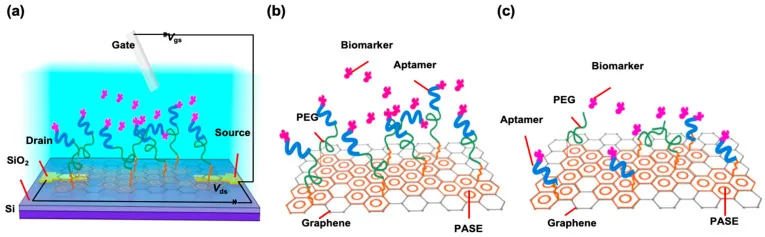
We combine aptamer recognition with graphene and metal–organic framework transistors to improve biomarker detection. Recent studies demonstrate optimized graphene surface chemistry for measurements in undiluted human serum and explore fast, reversible vasopressin sensing in buffered solutions.
Graphene surface functionalization (2026) · Vasopressin nanosensing (2024) · Metal–organic framework nanobiosensors (2024)
Intracellular probes for radiation biodosimetry
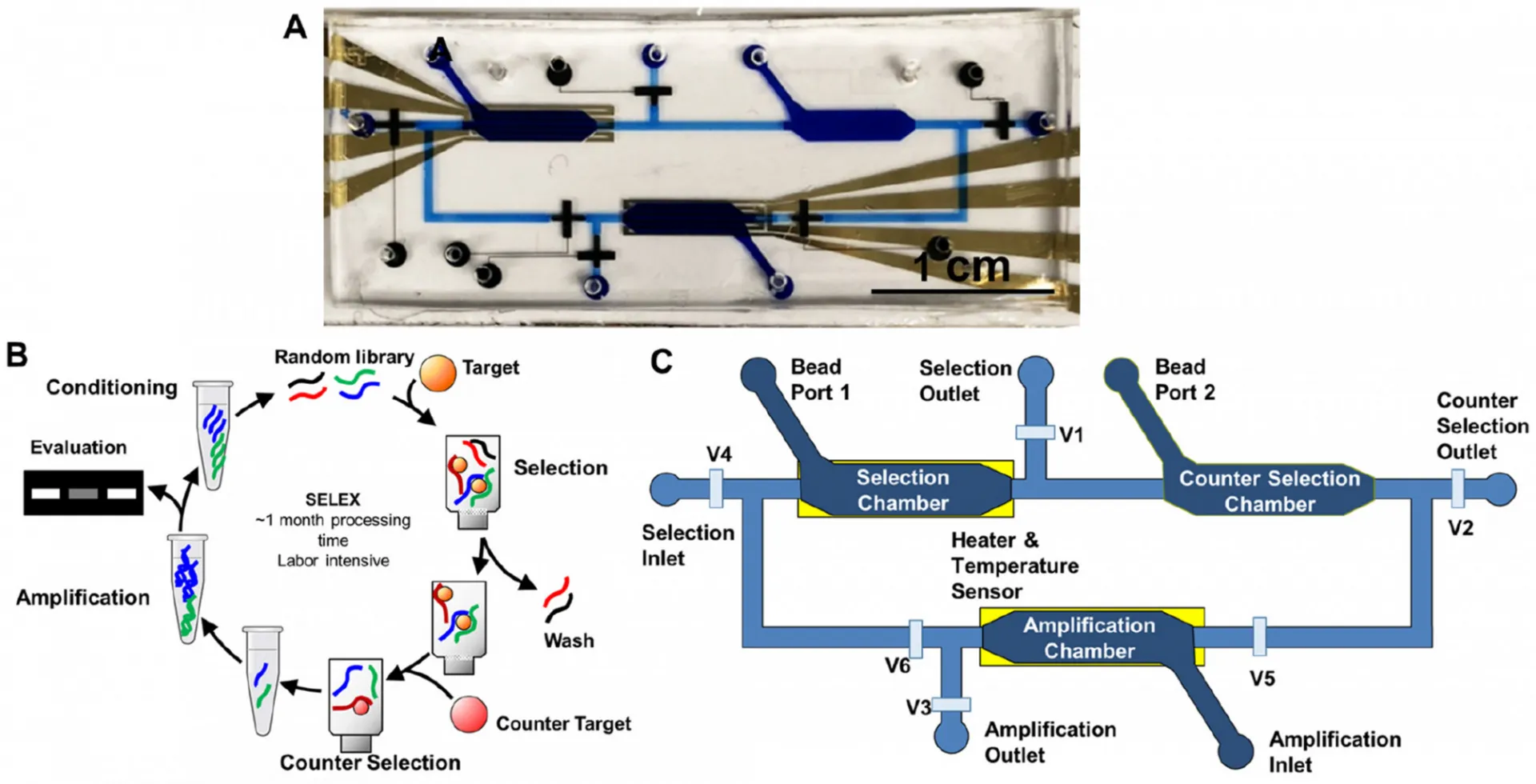
Microfluidic assays can reveal radiation-responsive molecular changes inside cells. Our recent proof-of-concept studies use molecular beacons to measure BAX mRNA and newly isolated aptamers to recognize BAX protein, supporting further development of rapid radiation-triage methods.
Intracellular BAX aptamers (2025) · Microfluidic mRNA measurement (2024)
Rapid aptamer discovery and therapeutic monitoring
Integrated microfluidic selection and cost-efficient candidate evaluation make target-specific aptamers more accessible. Recent demonstrations include probes for therapeutic antibodies and patient-specific myeloma immunoglobulins, together with a reusable dual-aptamer assay for recombinant proteins.
Cost-effective aptamer evaluation (2024) · Anti-idiotype aptamers (2024) · Patient-specific myeloma aptamers (2023) · Dual-aptamer protein assays (2023)
Microfluidics for molecular dynamics and structural biology
Research update · 2024
Microfluidic sample preparation provides controlled reaction timing for structural studies of fast biomolecular processes. Columbia’s 2024 research update describes Professor Qiao Lin’s development of a redesigned device to capture faster reactions, building on the laboratory’s earlier microfluidic spraying-and-plunging work.
Read Columbia’s research update · Explore the microfluidic cryo-EM technology
Calibration-free biomarker detection
Technology update · 2025
A Columbia technology disclosure describes determining protein concentration from aptamer-binding kinetics to reduce the need for individual sensor calibration. The approach uses graphene field-effect transistors and lists Professor Qiao Lin, Milan Stojanovic, and Wenting Dai as inventors.
Read the Columbia technology disclosure
Established research areas
Research conducted in our laboratory is in the general area of micro/nanoscale devices for biology and medicine. Our research centers on microelectromechanical systems (MEMS) as applied to biological sensing and manipulation, with an emphasis on controlling, sensing and characterizing biomolecules and cells by integrating MEMS transducers with microfluidics. The goal of such systems is to facilitate understanding of fundamental biophysical phenomena, as well as to enable practical biomedical applications. Such systems will allow automated, sensitive, high-throughput analysis of biological systems within well-controlled micro/nanoenvironments, and may enable novel biophysical investigations not attainable by conventional instruments.
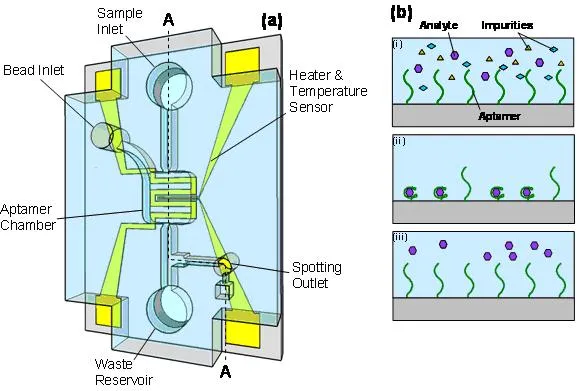
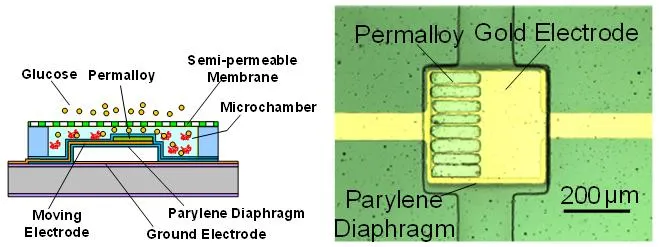
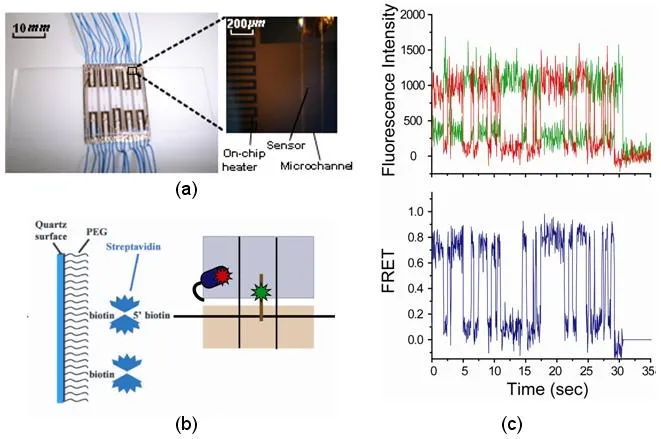
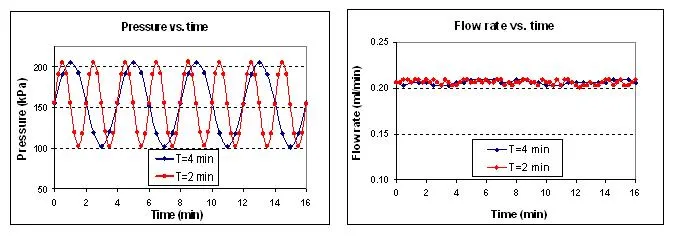
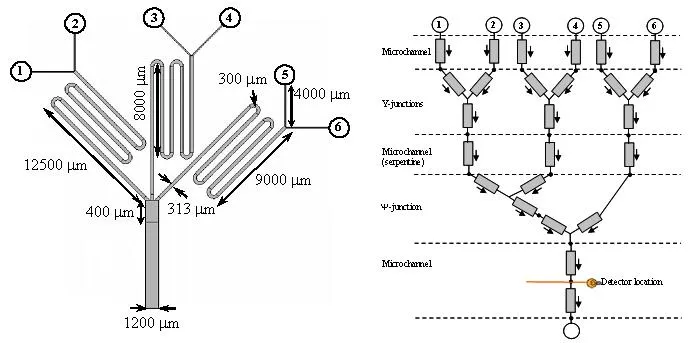
Our research projects primarily include aptameric microfluidics, implantable affinity biosensors, temperature-dependent bio-characterization, polymer-enhanced microflow control, and BioMEMS modeling. Results from these projects have contributed to the science and technology of MEMS-based biosensing and manipulation. For example, our laboratory was the first to report aptameric microfluidic systems that use thermally controlled, reversible aptamer-target binding for specific biomolecular purification and enrichment with isocratic elution. In the meantime, we are among the pioneers to employ MEMS technology to create implantable affinity biosensors for detection of metabolites such as glucose. We developed the first biocompatible, synthetic viscometric affinity glucose assay on MEMS platforms, and very recently, made the first demonstration of affinity glucose sensing by measuring specific, glucose-induced changes in the dielectric properties of a polymer in a MEMS device. Additionally, to enable characterization of temperature-dependent biomolecular binding, our laboratory demonstrated, for the first time, MEMS-based differential scanning calorimetry of protein unfolding events and temperature-dependent single-molecule studies of ribosomal translation elongation. Also, our research in polymer-enhanced microfluidics has resulted in novel compliance-based microflow control devices, and our modeling work has produced accurate and efficient models that offer in-depth scientific insights into as well as practical design guidelines for BioMEMS devices.
Descriptions of our major research projects are provided by the links below:
- Aptameric microfluidic systems for affinity manipulation and biosensing
- Implantable MEMS affinity sensors for metabolic monitoring
- MEMS-based characterization of temperature-dependent biomolecular interactions
- Microflow control by exploiting polymers as functional materials
- Accurate and efficient modeling of BioMEMS devices
Complete research project index
Explore every project page and supporting material from the original laboratory website.
- Affinity Sensor for Subcutaneous Glucose Monitoring
- MEMS affinity sensors for monitoring of metabolites
- Microfluidic Aptasensors
- Aptamer-based Cell Manipulation
- Aptamer-based Affinity Purification, Enrichment & Detection
- Integrated Microfluidic Selection of Aptamers
- Aptameric Microfluidic Systems for Affinity Manipulation and Biosensing
- Dielectric MEMS Affinity Glucose Sensors
- Viscometric MEMS Affinity Glucose Sensors
- Implantable MEMS Affinity Sensors for Continuous Metabolic Monitoring
- Temperature-dependent Biomolecular Binding
- MEMS-based Biocalorimetry
- Temperature-dependent Single-molecule Behavior
- MEMS-based Characterization of Temperature-Dependent Biomolecular Interactions
- Diffusion-based Chemical Concentration Generation
- Efficient and Accurate Models for Electrokinetic Microfluidic Systems
- System-level Models for Microfluidic Separation & Mixing
- Accurate and efficient modeling of microfluidic devices
- Microfluidic Devices with PDMS as a Functional Material
- Microflow Control by Exploiting Polymers as Functional Materials
- MEMS Calorimetric Biomolecular Characterization
- Temperature-controlled Single-molecule Platforms
- Thermally controlled characterization of biomolecules
Recent research in pictures
Aptameric graphene nanosensors · 2026
Graphene field-effect nanosensor and serial or parallel attachment of aptamers and PEG.
Dai et al., Sensors 2026, 26(2), 744, Figure 1. © 2026 the authors. CC BY 4.0. Read the article · CC BY 4.0
Microfluidic aptamer discovery · 2025
Full-chip SELEX platform used to isolate aptamers for the radiation-responsive BAX protein.
Meng et al., Radiation 2025, 5(4), 30, Figure 1. CC BY 4.0. Read the article · CC BY 4.0