BIOLOGICAL MICROSYSTEMS AT COLUMBIA
Discover.
Detect.
Understand.
Microfluidic platforms for aptamer discovery, electronic biosensing, and fluid mechanics for cryo-EM and micromixing.
Columbia BioMEMS Laboratory
Department of Mechanical Engineering
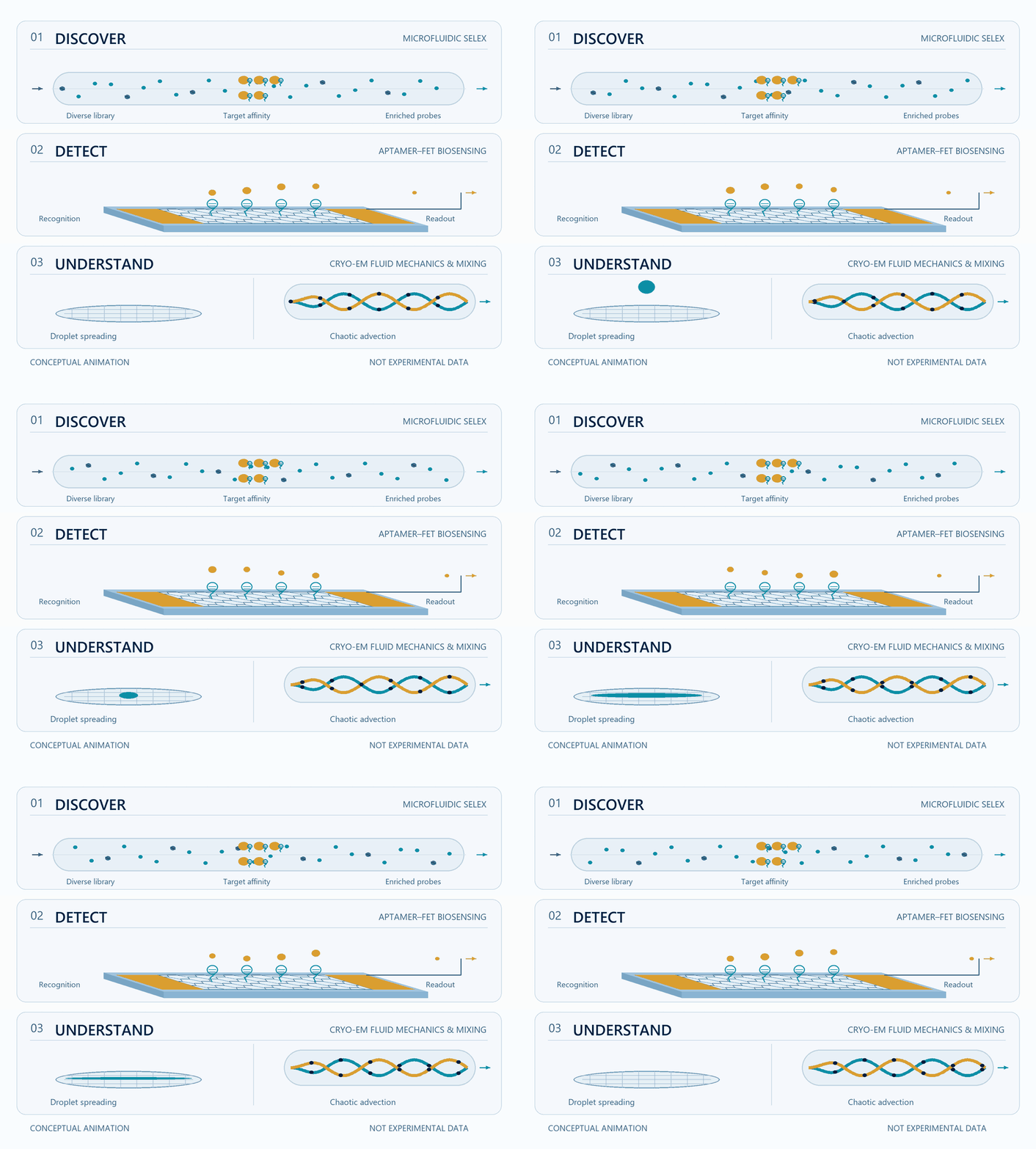
Discover, detect, understand: three directions in BioMEMS research.
Current research
Discover molecular recognition. Detect biological signals. Understand microscale flow.
We use microfluidic platforms to select and evaluate aptamers: molecular recognition tools for protein detection, therapeutic monitoring, and intracellular analysis.
We combine aptamer recognition with graphene field-effect transistors, studying surface chemistry and electrical biomarker detection in complex biological media.
We investigate droplet spreading and thin-film formation on cryo-EM grids, alongside the design and analysis of chaotic-advection micromixers.
BioMEMS at Columbia
Directed by Professor Qiao Lin, our laboratory in the Department of Mechanical Engineering integrates MEMS and microfluidics to sense, control, and characterize biomolecules and cells.
About the lab, directions, and contact information
Recent research
- Graphene nanosensors · 2026. Optimized aptamer and PEG surface chemistry enables biomarker measurements in undiluted human serum. Read the study
- Intracellular BAX probes · 2025. Microfluidically isolated aptamers recognize a radiation-responsive protein in proof-of-concept blood-model experiments. Read the study
- Aptamer discovery · 2024. Microfluidic selection and cost-efficient candidate evaluation support the development of target-specific probes for therapeutic-antibody measurement. Candidate evaluation · Anti-idiotype aptamers
Explore our research · View all publications
Join the lab
We welcome Ph.D. and postdoctoral candidates interested in biomedical microfluidic systems. Prospective researchers with training in engineering, chemistry, or biology are encouraged to contact Qiao Lin.


Columbia, our home
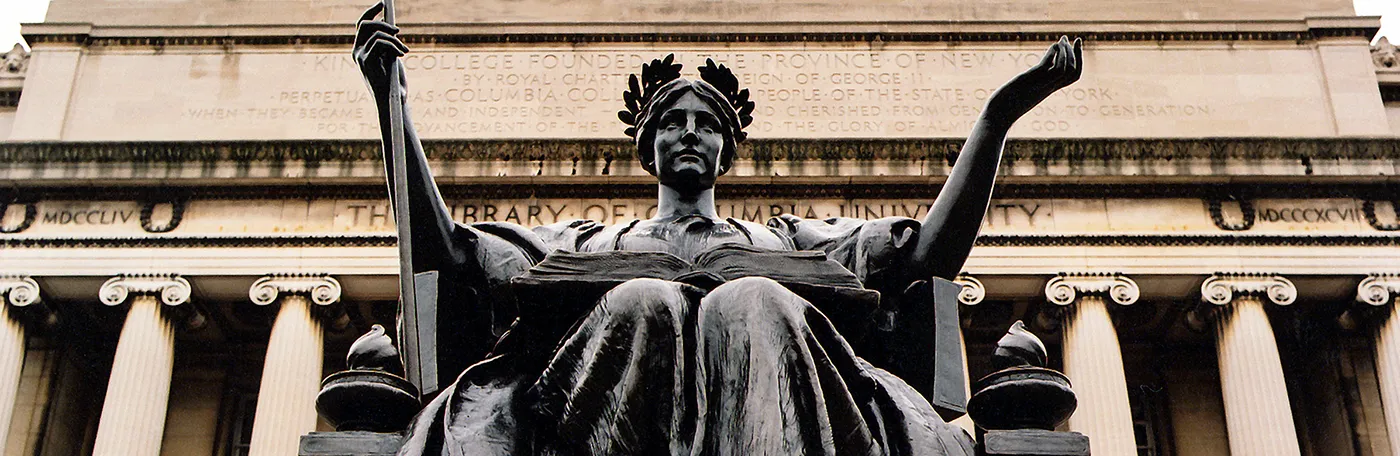
Alma Mater and Low Library on Columbia University’s Morningside campus. Photograph: Eileen Barroso / Columbia University. Columbia campus photographs.
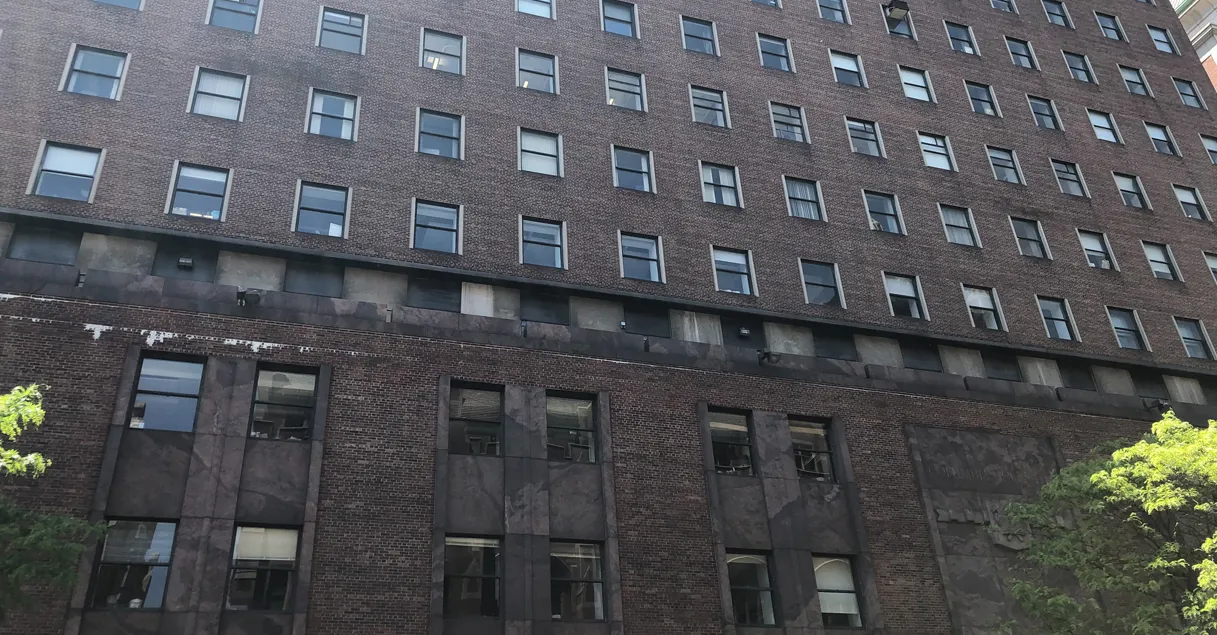
Seeley W. Mudd Building, home to Columbia Engineering.
Photograph: Columbia University Facilities and Operations. Image source.
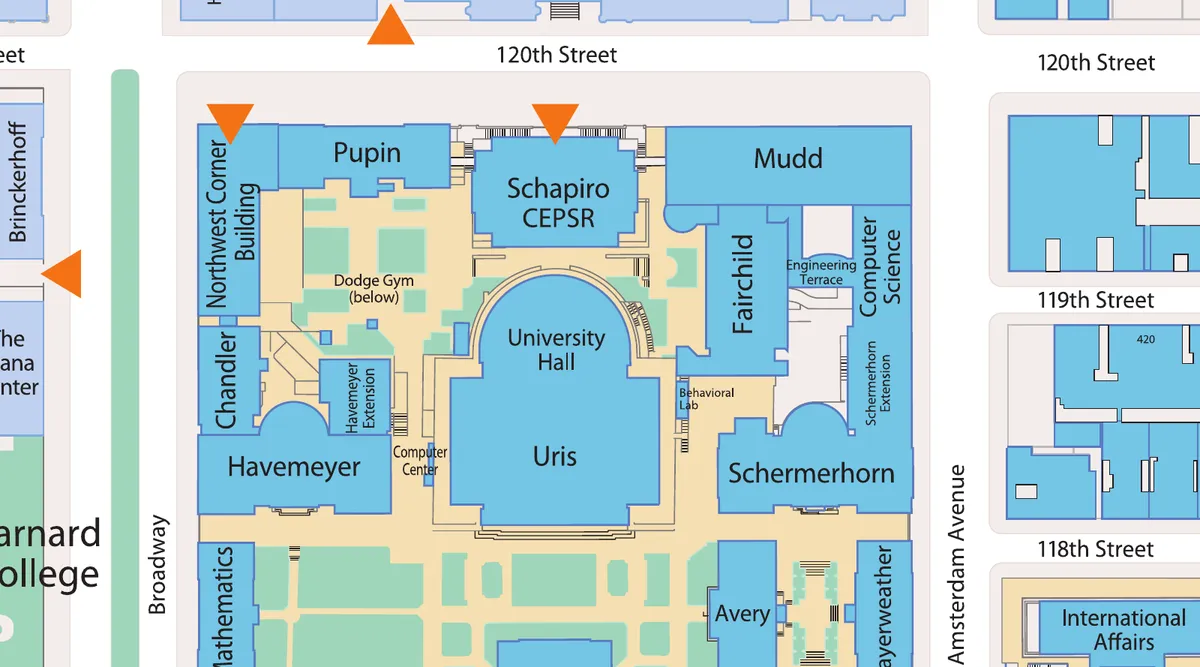
Find Mudd Building on Columbia’s Morningside campus.
Map: Columbia University Facilities and Operations. Full campus map.